Dates: Aug 2-7, 2026
Instructor: John Spotorno
Fee: $600.00 + meals and accommodations fees
Term: Summer 2026
Workshop Description
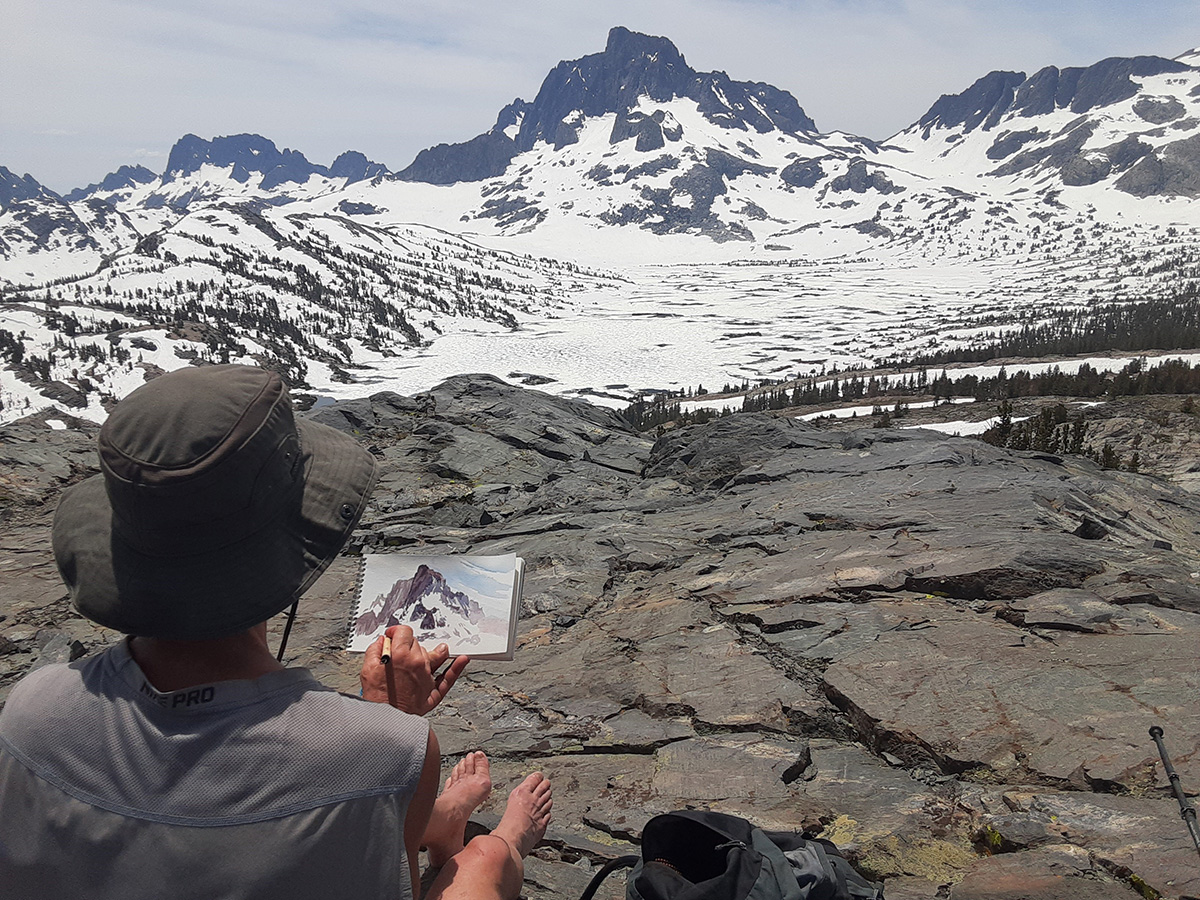
Immersed in the beauty of the high Sierra, unlock your creativity in the magical world of watercolor painting with our comprehensive 5-day “Plein-air” class. Whether you're an accomplished artist or someone seeking a new artistic outlet, this course will provide you with the foundational skills and techniques necessary to express yourself through the captivating medium of watercolors. Following the evening “meet and greet” orientation we will begin each morning with short exercises in the studio, in order to enhance our painting skills. Then, weather permitting, we will go out “Plein-air” selecting a variety of subjects in multiple locations which are to be determined. The goal would be 2 painting sessions per day with a break for lunch. John will offer on-going suggestions as desired to carefully guide you through each stage of creating a finished painting—from the initial sketch and color selection to layering techniques, blending, and adding intricate details that bring the artwork to life. John will be encouraging you to embrace your creativity and experiment with various styles. You will have the opportunity to apply the techniques you have learned throughout the workshop and continue to develop your own artistic voice. By sharing our work with each other at the end of each session, we will discuss the importance of self-critique and constructive feedback to continue our growth as a watercolor artist.
Instructor Bio
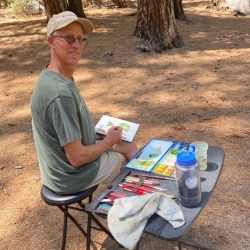
Instructor, John Spotorno, is a 4th generation Californian and a bay area native. He discovered his passion for drawing and watercolor painting while attending Cal Poly University School of Architecture and Environmental Design. A recipient of a national design award allowed John nine months of European travel honing his skills in plein air painting and sketching. John is a licensed Architect currently practicing commercial architecture in Palo Alto, California. John joined the Pacific Art League in 2021 and has had his paintings on display there and at University Art in Redwood City. He routinely leads a summer watercolor camp for youth and teens and “Introduction to Watercolor” courses throughout the rest of the year for adults. Selecting subjects, many from the California coast to the High Sierra, he continues to develop his painting skills while also studying with local artists Steve Curl, Rafael DeSoto, and Robert Dvorak.
Workshop Details
Plein-air painting suggestions
• Come prepared with a setup that is compact enough to carry around.
• Please include an empty water container for dirty water. It is a good idea to get into the habit of not discarding used water on the ground.
• Try simple subjects accomplished in a few hours or less.
• “Frame” your composition. Option to do a black and white value and/or watercolor thumbnail sketch.
• Think simple shapes to define trees, buildings, and the sky. “Squint” at the subject to help “see” simple shapes.
• Freeze” or capture the shadows and light, do not “chase” them as they are in constant motion.
• Emphasize the subject with stronger colors and/or higher contrast.
• Define shapes with contrasting values.
• Emphasize “Aerial Perspective”. Generally closer objects are more defined, have higher contrast and warmer tones. Conversely, distant objects appear less defined, less contrast, more muted colors in cooler tones.
• Try and group shapes into three simple connected tones; light, medium and dark.
• Be aware of positive and negative space.
• Consider saving the white paper for the brightest value.
• Paper tilted to use gravity to control paint flow.
• Plan for the paint to dry quickly. In order to create a nice clean wash either wet the areas first or create a large pool of paint before applying.
• Work quickly but deliberately.
• Apply paint using the largest brush possible and minimize back and forth strokes
• Generally, work large to small, general to specific, light to dark, distance to near.
• Colors appear approximately 20% lighter dry than when first applied.
• Relax, have fun, collaborate and share with each other.
Workshop Supplies List
BINDER CLIPS (optional)
GENERAL DAY SUPPLIES (in addition to your art supplies):
Remember that you want to be able to carry your supplies efficiently! Come prepared with a setup that is compact enough to carry around and move from location to location.
• Backpack to hold all your supplies and keep your hands free as you walk around.
• Clipboard or piece of foam board for support under your paper or sketchbook.
• Portable stool, camping chair, sitting pad, or towel to sit on.
• Weather appropriate attire (packable waterproof jacket for unexpected rainstorms).
• Sturdy, water resistant hiking shoes or boots.
• Sunscreen, sunhat, and sunglasses.
• Bug repellent.
• Lunch, (if we journey away from camp), snacks, and plenty of drinking water
Color suggestions as follows:
• Lemon Yellow
• Cadmium Yellow
• Alizarin Crimson
• Cadmium Red
• Oprah Rose
• Hookers Green
• Sap Green
• Yellow Ochre
• Burnt Sienna
• Burnt Umber
• Cerulean Blue
• Cobalt Blue
• Ultramarine Blue
• Payne's Gray
PENCIL & ERASER: Don’t forget a pencil sharpener and a small baggie to catch pencil shavings if you bring a regular pencil! A Kneaded Erasier is preferred to limit paper damage.
WATER CONTAINER: You’ll need two small cups to hold water while painting and two containers to carry water — you’ll need one to refill your water cup and one to carry out dirty paint water.
PAPER TOWELS, a sponge, or fabric to help clean your brush between colors.
SMALL WATER SPRAY BOTTLE
PAINTERS TAPE (optional)
Lodging and Camping Supplies
CAMPING GEAR IF YOU ARE STAYING ON CAMPUS
- tent and sleeping pad (unless you are staying in our tent with a cot provided)
- warm sleeping bag
- pillow, toiletries, and towel
- flashlight and lantern
- alarm clock
FIELD GEAR FOR EVERYONE
- day pack
- sunscreen
- insect repellant
- water bottles
- plastic containers for packed lunches
- sense of humor
YOU MIGHT ALSO WANT TO BRING
- camera
- binoculars
- hand lens
- camp chair
CLOTHING
The weather in the Sierra Nevada can vary greatly, even in a single day. Be prepared for chilly temperatures at night, even below freezing early in the summer. Rain is a possibility any time, whether forecast or not. Variable weather clothing that can be layered is best: long pants and a long-sleeved shirt, warm sweater and jacket, t-shirt and shorts or skirt, sturdy shoes or hiking boots, sun hat, rain gear, and a warm hat or gloves for cold weather and/or night activities. And, if you come later in the season, bring your swimsuit for afternoon dips in the lakes!